







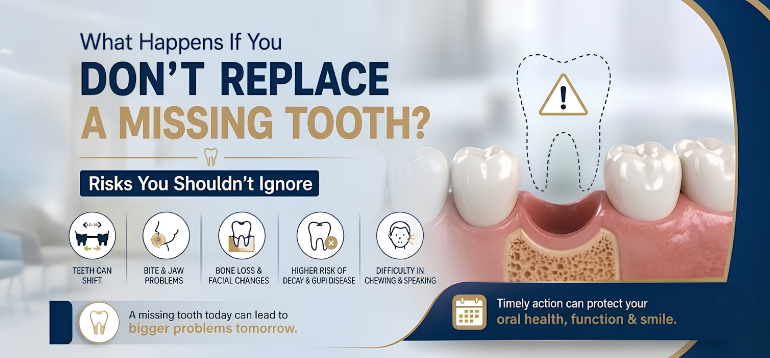
What Happens If I Don't Replace a Missing Tooth?
Losing a tooth may not seem like a major problem, especially if it's at the back of your mouth. However, leaving a missing tooth untreated can affect your oral health, appearance, and even your ability to chew properly.
If you're wondering what happens if you don't replace a missing tooth, understanding the potential risks can help you make an informed decision about treatment.
Why Replacing a Missing Tooth Is Important
Every tooth plays an important role in maintaining your bite and supporting neighboring teeth. When a tooth is lost, the surrounding teeth and jawbone begin to change over time.
Ignoring a missing tooth may lead to long-term dental problems that are often more complex and expensive to treat.
Consequences of Missing Teeth
The effects of tooth loss depend on which tooth is missing and how long it has been absent.
| Problem | How It Affects You |
|---|---|
| Teeth Shifting | Nearby teeth move into the empty space, causing misalignment. |
| Bone Loss | The jawbone gradually shrinks because it no longer receives stimulation from the tooth root. |
| Difficulty Chewing | Eating certain foods becomes uncomfortable and less efficient. |
| Bite Problems | Uneven pressure on the remaining teeth can affect your bite and jaw function. |
| Changes in Appearance | Bone loss over time can make the face appear sunken or older. |
These are some of the most common missing tooth side effects if treatment is delayed.
What Happens If You Don't Replace a Missing Tooth?
When a tooth is missing, the surrounding teeth naturally begin to drift toward the empty space. This movement can create gaps, crowding, and bite problems.
Over time, the jawbone beneath the missing tooth also starts to shrink because it no longer receives stimulation during chewing. Bone loss may make future tooth replacement more challenging. Depending on the location of the missing tooth, speech and chewing may also be affected.
Tooth Replacement Options
Fortunately, there are several effective tooth replacement options available today.
- Dental Implants: Replace both the tooth root and crown, offering a natural look and feel.
- Dental Bridges: Replace one or more missing teeth by using adjacent teeth for support.
- Partial Dentures: A removable option for replacing multiple missing teeth.
Your dentist will recommend the most suitable treatment based on your oral health, bone condition, and personal preferences.
Benefits of Replacing Missing Teeth
Replacing a missing tooth can help:
- Restore normal chewing function.
- Prevent neighboring teeth from shifting.
- Maintain jawbone health.
- Improve appearance and confidence.
- Support long-term oral health.
Early treatment is often simpler and helps prevent additional complications.
Key Takeaways
- A missing tooth can affect more than just your smile.
- Common consequences of missing teeth include bone loss, shifting teeth, and chewing difficulties.
- Understanding what happens if you don't replace a missing tooth can help you avoid long-term problems.
- Modern tooth replacement options such as implants, bridges, and dentures can restore both function and appearance.
Conclusion
Ignoring a missing tooth may seem harmless at first, but over time it can lead to changes in your bite, jawbone, and overall oral health. Replacing missing teeth early helps preserve your smile and reduces the risk of future dental complications.
Schedule a Consultation
If you have a missing tooth and would like to explore the best treatment options, consult Dr. Vishwas Madan at Ivory Dental Clinic.